Outward Flow

Sometimes people make the mistake of making a casual statement about the weather to me. And sometimes I pick up on the fact that it is indeed just a passing comment, and I respond appropriately. “Yes, it is really hot today, hopefully we get some rain tomorrow.”

But sometimes I launch into the details of the weather patterns like a new convert to Malley’s Chocolate.

Person making casual small talk: “It’s so hot today. I hope the rain tomorrow cools things down.”

Me: “Yes! That cold front should cool the temperature down! Isn’t it fascinating how it is causing drastic differences in temperature and generating those intense storms?! And the pressure difference! Have you seen that low pressure system spin? It’s covering half the country! One of its bands should hit here tonight! It is a pattern we frequently see in the spring but not in July. It is probably caused by the oscillation of the Jet Stream….”

Person wanting only casual small talk: “Yeah, I’m going to go find some AC.”

I have always been fascinated by the weather, but it wasn’t until I began teaching physical geography that it began making a lot of sense (if you really want to learn something, teach it…). Global temperature and atmospheric pressure patterns are ultimately responsible for our local, day-to-day weather patterns but it can be challenging to make the link between the two.

Most of us look at the weather forecast to see what to plan for – sunshine or rain, hot or cold? Should we buy snacks for a picnic on Saturday or not? Should we take a rain jacket  to work? But what causes the weather to be sunny or cloudy and rainy? Much of the time, it has to do with which pressure system is dominating a region.

Atmospheric pressure is a significant driver of our weather patterns. You’ve probably heard the terms “high pressure” and “low pressure” systems on weather reports. When a high pressure system is over a region, the weather will usually be clear and sunny. If a low pressure system is in place, however, the weather will likely be unstable, cloudy, with the possibility of rain, snow, or storms.

One of the easiest ways to picture a pressure system is to think of a hurricane as seen on a weather map, which is an extreme example of a low pressure system, but one we have probably all viewed on news reports. If you recall the spiraling image of a hurricane on a radar screen, the center of the hurricane – the eye – is the area of lowest pressure and winds are being pulled in towards that center. Because of the Coriolis Effect, the winds do not blow straight into the center but are deflected to the right in the Northern Hemisphere, which results in a spiraling, counter-clockwise swirling motion. As the winds converge at the center, they are also ascending upwards.

With a high pressure system, winds are blowing outwards, away from the center of high pressure. Again, because of the Coriolis Effect, high pressure systems spin, but they flow in a clockwise pattern. The winds within a high pressure system are descending and moving from the center of the system, outwards, which produces a stable atmosphere, and therefore generally clear and sunny skies.

In summary,

Low pressure system: cloudy or stormy, converging and ascending air flow, counterclockwise motion

High pressure system: sunny, diverging and descending air flow, clockwise motion

These patterns can help us better understand our weather conditions and also serve as examples that help illustrate our own energy system. Similar to pressure systems, we can give of ourselves and have love/generosity/kindness flow from our being outwards (like a high pressure system) or we can try to take it all in (like a low pressure system). Within a high pressure system, air descends and flows away, and as it does this, it does not create a vacuum but rather it pulls the air from the upper part of the atmosphere and sends it down and outward. This process produces atmospheric stability (calm weather conditions). Likewise, when we give of ourselves and allow love to flow outward, our being is more settled and secure. Low pressure systems pull the air in and send it upward to the upper part of the atmosphere, but in doing so, they generate instability within the atmosphere. Likewise, when we just want to pull energy towards us, we create a sense of clinging and insecurity. We are unsettled and have this desire to pull in more with the illusion that doing so will make us feel fulfilled.

Using Jesus as an example here, he was constantly giving of himself, not in a depleting manner, but in a life-giving way. He served more as a pipe that loved flowed into and then out of and on to others. He relied on the constant inflow of energy, and did not try to be the source of the energy. When we act as the source, we quickly can give out. He was able to accept energy from the Source and then freely send it out. We can also do this. We can allow love and life-giving energy in and then pass it on and give it away. We know the source of such love is infinite and have no need to hold on to it or act as if it will run out.

Contrasting Jesus, would be the tenancy to hold on tight to our “personal salvation projects,” as it has been called. This is when we draw boundaries, place people in categories, and act as though love/God/heaven is a scarce resource that we need to grab hold of before it runs out. We pull it in to us, we grab hold and suck it towards the center of our personal world. We then focus that energy in one direction and cannot see beyond our narrow view. Similar to storms, this can be destructive to ourselves and others. We all will have these “low pressure systems” blow in at least once in a while, but if they stay and are allowed to take over, they will generate much damage.

Our aim then, is to retain or restore the outward flow. When we are feeling angry, slighted, fearful, or like we just aren’t enough, our tendency is to constrict, pull within our self, and cling to anything we’ve got. We can recognize this and then work to regain an outward flow.

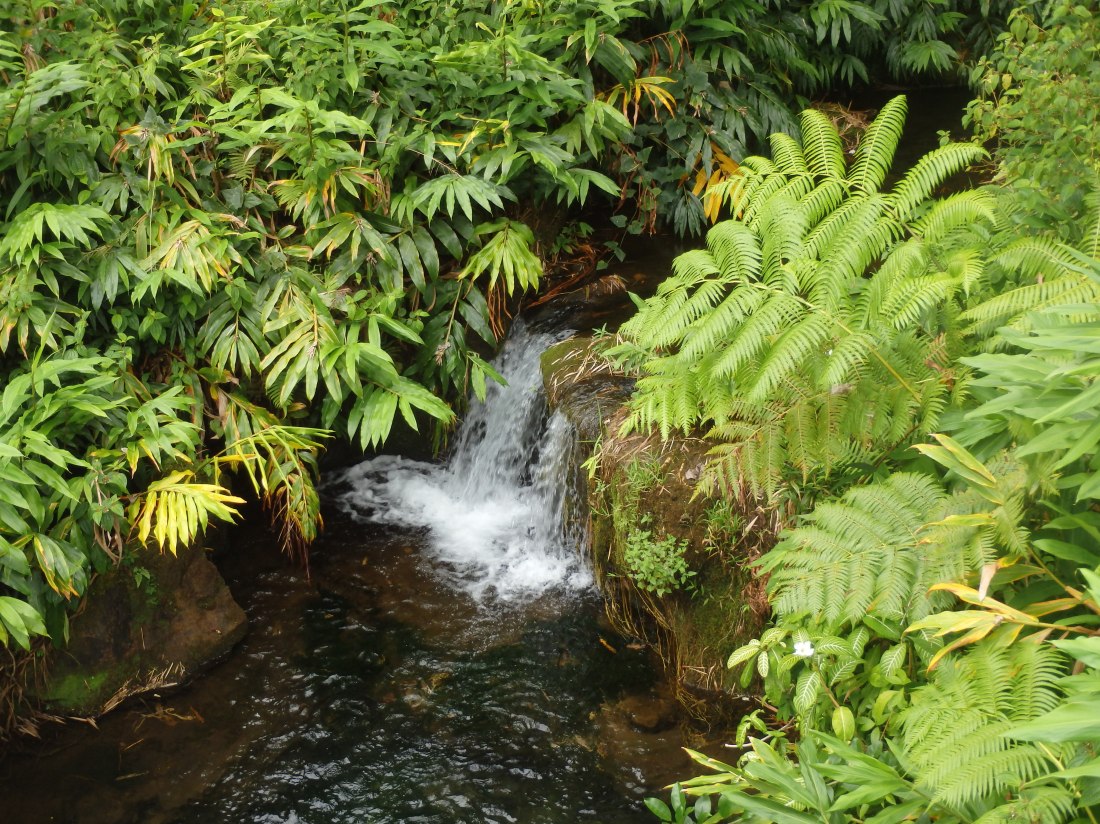
(Image: sunbeams over a white sand beach in Hawaii)
Life through Death: What Detritus can Teach Us

“…I say to you, unless a grain of wheat falls into the earth and dies, it remains alone; but if it dies, it bears much fruit.” – John 12:24, RSV

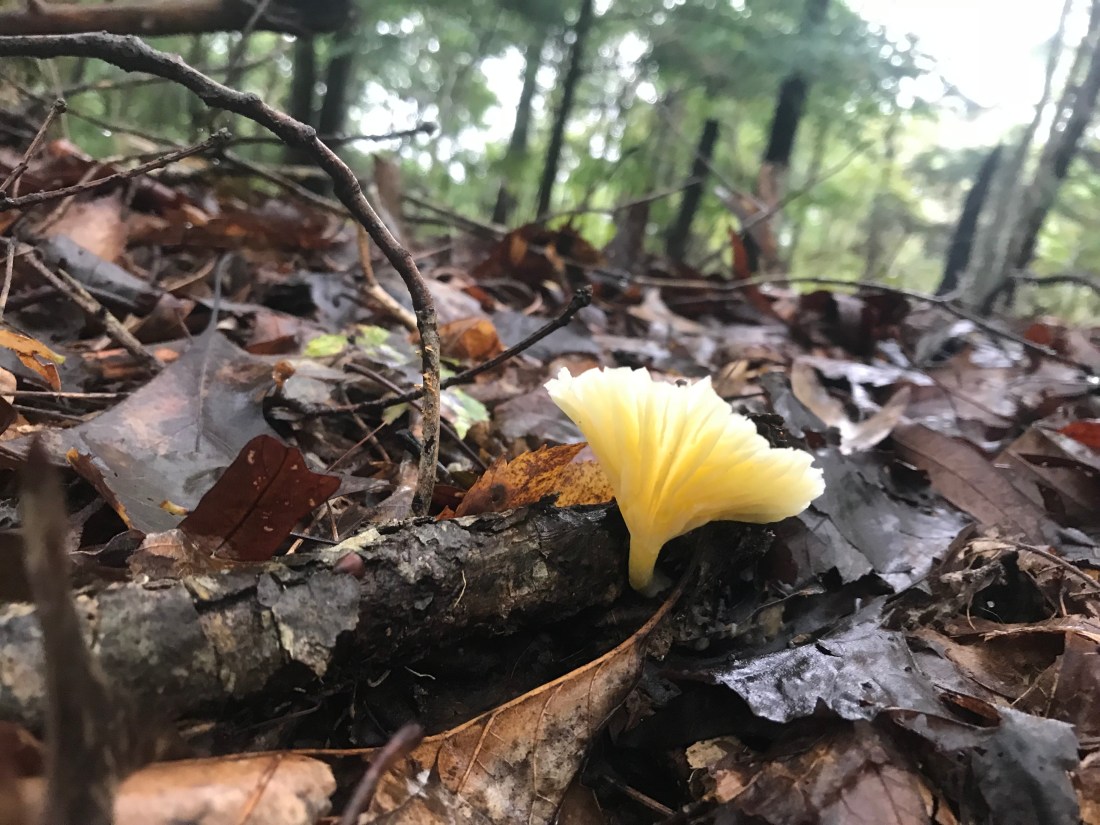
Detritus, by definition in ecology, is non-living, organic material – such as fallen leaves, insect bodies, scat – that is decaying but has not yet broken down into microscopic particles. Take a walk off-trail in a forest and you are likely tromping over detritus. Through the process of photosynthesis (the conversion of light energy into plant matter), trees take in nutrients from the soil and air to produce plant material during the spring and summer. In the fall, when the leaves are no longer needed, the process is halted and leaves are dropped from the tree.

Bacteria, fungi, and small animals break down leaves after they fall to the ground into smaller and smaller pieces. The breakdown process continues to the microscopic level, when carbon and other nutrients are released into the soil or air. These elements are subsequently taken up by other plants and used to create new growth.

The process of carbon and nutrients being used and then released and taken up again is a cyclical process of energy and matter transformation. A forest may look the same from day to day and year to year when looking at it from afar, but up close, change is always occurring. Nature is constantly renewing itself and recycling materials no longer needed in its current form, allowing it to change into a useful and life-giving substance. The process of letting go, death, renewal, and growth is continuous.

We would probably benefit from such a process as well – to eliminate what is no longer life-giving (death) and transform ourselves bit by bit, incorporating useful and renewing practices into our daily lives. Letting go of things no longer serving us, allowing them to be opportunities for renewal that blossom into growth.

Change is hard, but it can be practiced and something brought about by concerted effort. Letting go, renewal, and growth often call for change of some sort. Buddhism, Judaism, Christianity, and Islam all call for a daily attention to prayer and/or meditation. Jesus is quoted as saying take up your cross daily. These practices lend to the importance of daily, repeated attention to letting go of what is not useful to our soul and facilitating the growth of what is life-giving or soul-feeding.

Hundreds of Spider Webs in a Field

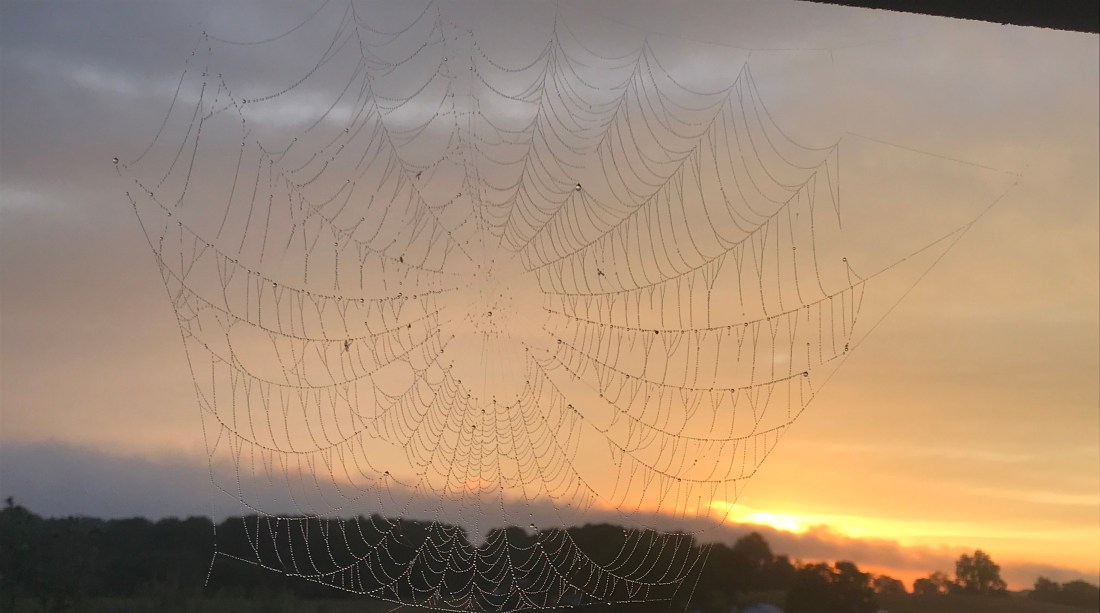
On summer mornings just as the sun is streaking through the tree leaves and limbs, hundreds of spider webs are revealed in a field. The dew droplets hanging on each strand light-up the nets that were formed the previous night. If you move beyond the fact that there are THAT many spiders in the field, it is a beautiful cascade of webbing, light, and water all combining against a backdrop of golden-coated green grasses. In order to hunt, some species of spiders make webs each night to capture prey. During the day, breezes or irreverent deer tear the webbing apart with one sharp grasp of the surrounding blades of grass.

The spiders do not witness the beauty that their many webs make within a patch of field. They need to eat, so they build a web. They do not care if we recognize the beauty or not. It is their livelihood. If no human sees the webs, no matter. If their web doesn’t catch an insect, the spider has failed at the hunt for that night. The beauty they create is not for us. But it is a gift to us if we see it.

The next morning, new webs fill the field. Each individual spider has crafted a new net to hopefully snag dinner. Each day, this process repeats itself. This beautiful and ever changing mosaic painted fresh each night and revealed by sunbeams each morning. And the spiders are just doing their thing, only aware of other spiders in terms of competition or mating. From our perspective as massively large beings (relative to a spider), we stand amazed. While we slept or stared at our phones, these quarter-sized creatures generated material pound-for-pound stronger than steel from their abdomens and wove an intricate web that caught insects and dew drops.

What if our lives are like those of the spiders? What if from afar, we are in the process of creating beauty? Of weaving a tapestry that is unveiling the inherent goodness of the earth and spirit?

As we go about our days, trying to meet our basic necessities, our smile transmits joy as a dewdrop reflects sunlight. Our letting go of the anger as someone cuts us off in traffic, our picking up and recycling a plastic bottle rolling across a parking lot, our eating and appreciating a piece of fruit, our gratefulness for the beauty of a sunset, our pain on seeing a stray dog wandering along the street are all like dewdrops creating strands of reflected light.

The Process of Change

I was fortunate to visit the Grand Tetons in late September for a conference one year. The experience while we were outside was an immersion of the senses. The combination of the smell of burning wood from nearby wildfires and the explosion of fall leaf colors reminded me of the cycles of disturbance and seasons. The autumn colors within the valley were a tapestry of yellows, reds, and maroons that revealed themselves from behind a curtain of thick smoke. The colors were so vibrant that my eyes could not fully absorb the richness and beauty.  The Snake River flowed through the flat valley between dramatically steep mountain sides over smoothed rock making calm gurgling sounds. The water level was shallow since the spring snow melt was months past, but the water was still cold to the touch. The dry shrub crunched underfoot, which released whiffs of sage. I wanted to be there in that unfolding of summer until snow started falling. Like the leaves, however, I could not stay for long. I was only there for a few days and had to attend talks. I’m sure within a week or two those leaves began falling to the ground as the trees prepared for the coming winter.

As temperatures become cooler and the daylight length shortens within the temperate regions (found between the poles and the tropics) of the world, deciduous trees begin preparing for winter. Enzymes, triggered by cooler temperatures, start sealing off the boundary between the woody twig and the base of the leaf stem. As this occurs, photosynthesis stops, and chloroplasts – the cells that cause the leaf to look green and carry out the photosynthesis process – are no longer needed. We see leaves as green because the red and blue wavelengths are absorbed, but green light is reflected. Once the chloroplasts die, however, other colors are reflected, resulting in the reds, yellows, and oranges of autumn. The leaves will then be cut off from the tree and drop to the ground.

This leaf fall process protects the tree during the cold winter months. If the deciduous leaves were to remain alive on the tree, they would be at risk for freezing and would facilitate the accumulation of snow and ice, which could cause limbs to break under the added weight. Leaves during winter would also not be as effective at photosynthesizing  because of the shorter amount of daylight and less direct sunlight, while at the same time they would be losing moisture through the stomata (tiny holes within the leaf). For the health of the tree, the leaves die and fall to the ground before winter. This process also benefits the organisms that live below the tree. Leaves will break down and add nutrients back into the soil. If a stream is nearby, the leaves serve as food to some aquatic organisms. This death and loss actually contributes to new growth. 

Change is often a process, not something that happens within an instant. Leaves do not just pop off of trees. That is usually what we see, our perception of the process, but it actually takes a while for that break between the leaf stem and the tree branch to occur. Enzymes trigger cells to severe the stem from the branch, then those cells have to grow, photosynthesis stops, the tree seals the cut, and then the leaf falls at some point. Some leaves even hold on throughout the fall and into winter, whereas others snap off before the official first day of autumn. Likewise, we can expect some of our “leaves” to rather easily snap off while others will take time.

Practices such as centering prayer, meditation, and mindfulness can help us with this process. We free up space in our heads and hearts when we are able to let go of anger, clinging to control, desiring others’ approval, thinking we are the worst person on the planet, thinking we are the best person on the planet, etc. This process can be quite challenging and take a lifetime of work.

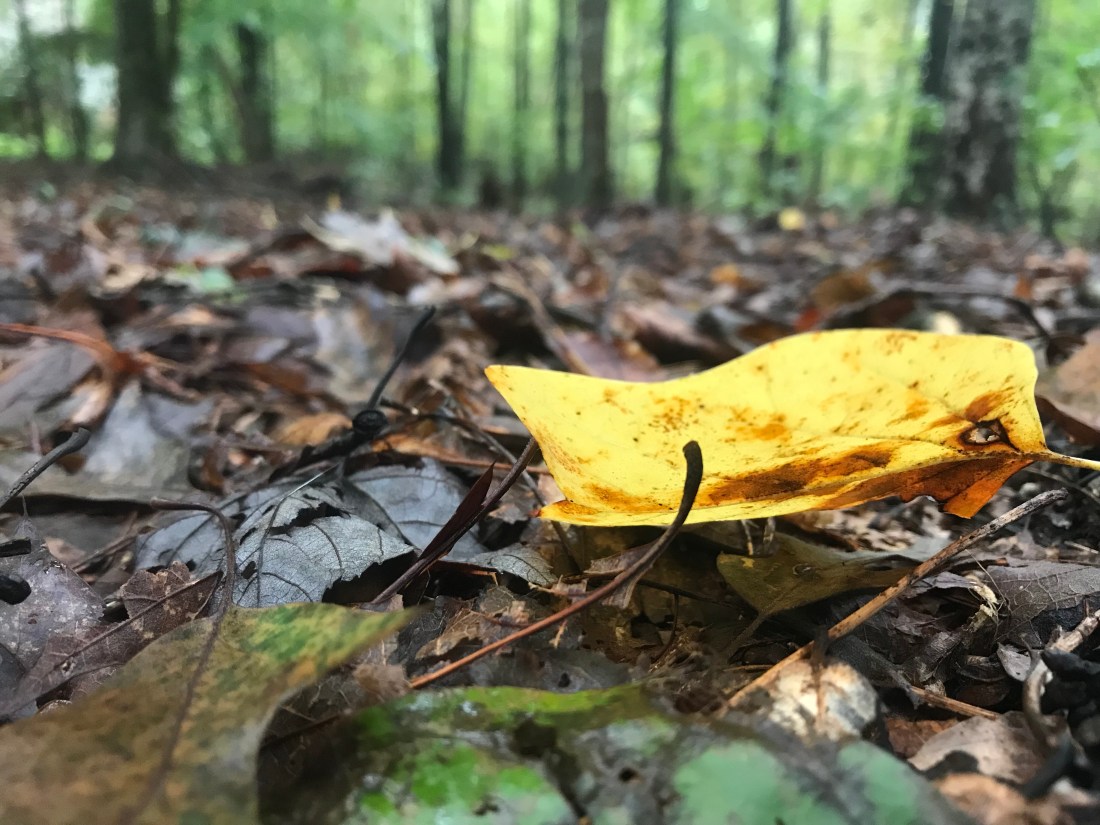
(Image: Tulip tree leaf on the forest floor)

Worn, Torn Leaves

It is early November when the autumn-angled sunlight plays with yellows and reds of tree leaves in a dance of colors. Between the time when summer transitions to fall and fall to winter, the angle in which we receive the sun’s rays shifts closer to the horizon as its more direct rays fall on the Southern Hemisphere. The light, therefore, comes in to a forest or grove of trees from a more oblique angle rather than overhead. As leaves twist in the breeze, the broadside of the leaf catches the sunlight and then passes it to the thin side of the leaf before receiving it again. The leaves at this time of year are not as robust as they once were and hang more loosely to the tree. A light breeze can send them into an energized frenzy of movement or off of the tree altogether.

With such movement, they douse the forest with a show of light and colors. The leaves at this time of the year are also worn and sometimes tattered. Not only is the light reflected on the leaf but holes and tears on the leaf let sunlight through to the forest floor in haphazard bursts. Upon closer inspection, you can see that some leaves have what looks like netting within them where the leaf has largely worn away but the veins are still present. Some leaves are ripped or partially eaten, while others have brown spots from disease or other defects.

They are far from the fresh new leaves of spring. They have weathered storms and converted materials to tree matter using the energy of the sun. They have sheltered birds and served as food to insects.

And soon, the tree will let them go. Much of the time I think we are carrying around stuff in the same way as a tree would be if they kept their leaves year after year. Could you imagine a springtime where leaves would emerge as they were at the end of summer or if they remained in place year after year? Tattered, tough, half eaten, and worn? Even non-deciduous trees drop their leaves or needles yearly so new ones can emerge.

When we hold on to past hurts and pain, or don’t love ourselves, or think we are not worthy of hope and joy, we continue to carry these painful “leaves” around from years ago. They are worn and ripped. We cling to the tattered leaves because we know them and feel as though they are part of who we truly are. The pain can become so embedded, it acts as if we would not be who we are without it. But it is not who we truly are. Letting go and change are hard, even when the things are not good for us.

But letting go frees us and allows for new growth.

As trees let go of their leaves in the fall, we also benefit from letting go of aspects of ourselves that we no longer need or that are not good for us. We cling to so much – stuff, ideas, emotions, images, perceptions – that cloud our spirit and hold us back from growth. One of the big things that many of us hold onto for dear life is control, or rather, the sense of control. We want to be in control of our lives, our futures, our emotions, our thoughts, our circumstances, and it can be easy to perceive that you are in control of all these things.

We can learn from trees by dropping the emotions, motivations, and drives that may have served us well, but are no longer needed. Some of these “leaves” we need to drop may take years to fall away, but we can also practice letting go of the smaller stuff too. When taking a walk outside after work, my mind is often racing with thoughts about what has happened during the day, what I need to get accomplished before night, what I should fix for dinner and I completely miss the dragonfly that lands on the fence line beside me and the sound of papery beech leaves rustling in the breeze. Allowing the thoughts to let go and fall away enables me to remain open to the present moment.

And that is how we can start. Practice catching yourself thinking about the next few hours or what occurred earlier in the day, and many times you may realize that small thoughts fill most of your time. “What did he mean by that comment?” “What if the spot on my shirt was noticeable throughout the entire day? Was it there during my meeting?” “Will I get home in time to fix the chicken or should I just plan on making grilled cheeses?” As these thoughts clutter your mind, the sensations of the present moment pass by unnoticed. The first step is just noticing what you are thinking about. The second step is to choose to come back to the present. How does the sip of coffee taste? Is your office air cold or warm on your skin? How is the sunlight striking the wall or the road in front of you?

Allow leaves to serve as a reminder to you. As you witness a leaf float to the ground, shift your thoughts to the present. As you see leaves from last year piled up against the building, contemplate leaves you may not know you even are hanging on to – past hurts and pains – and how you may go about letting them go (this may take time (potentially lots of time) and talking with friends, a therapist, or a religious leader). I believe this is a life-long process that takes daily effort. Trees lose their leaves every year, it is not a one-time event but rather an ongoing process.

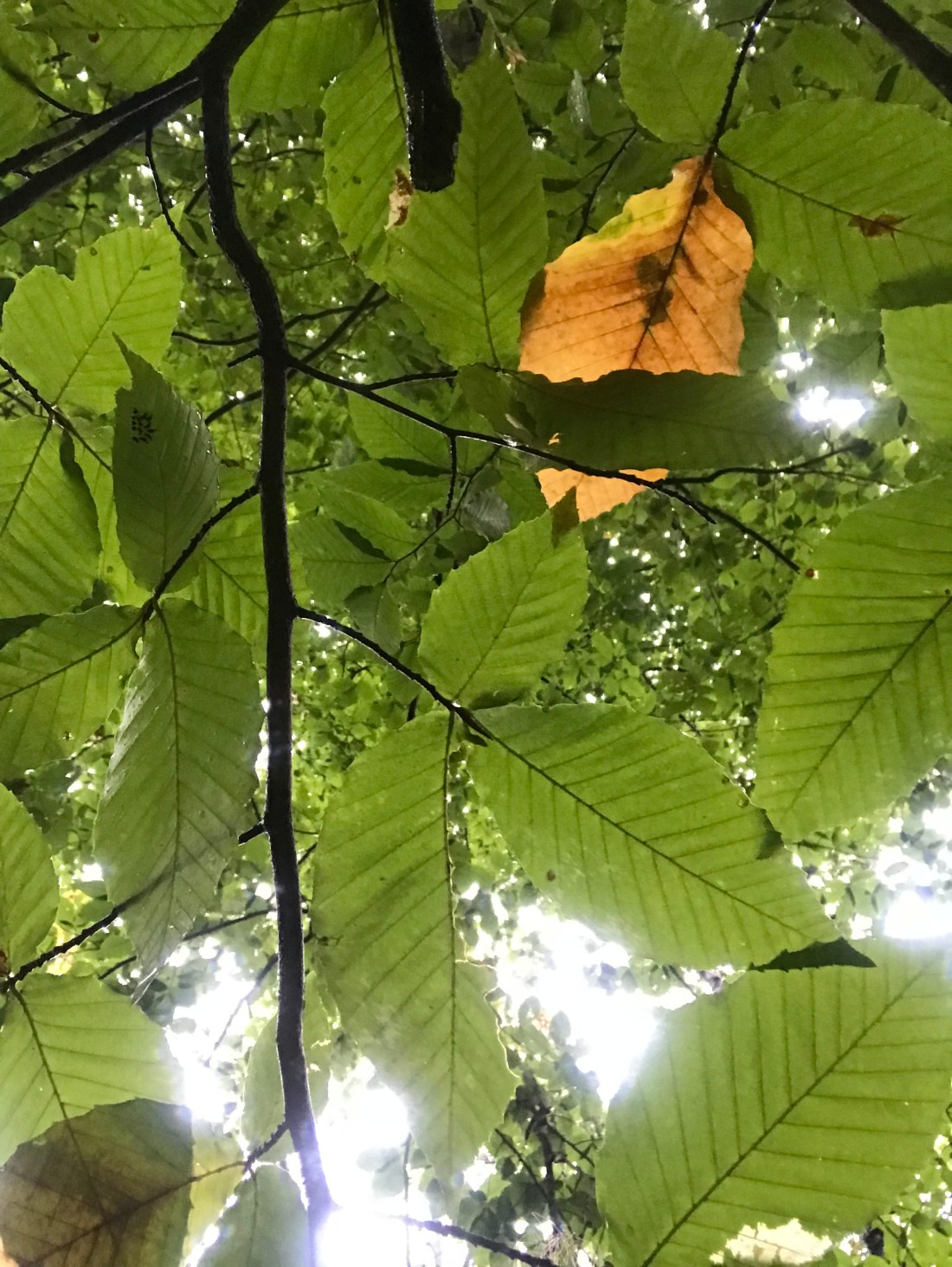
(Image: beech tree leaves)

Homing Instinct

I walk into a grocery store with three items on my list and walk out an hour later. And it is not because I bought way more than I planned but because I walked through the entire store five times looking for my three items. I can never remember where they house peanut butter, or why cheeses are located in two different sections. I know pita chips are in a strange place, but where…? So an hour later, four items purchased (I had to add chocolate after the stress of searching for peanut butter for 20 minutes, the internal debate over whether or not I should ask for help, the questioning of how my life was being spent), I make it out to the parking lot and try to remember where I parked my car.

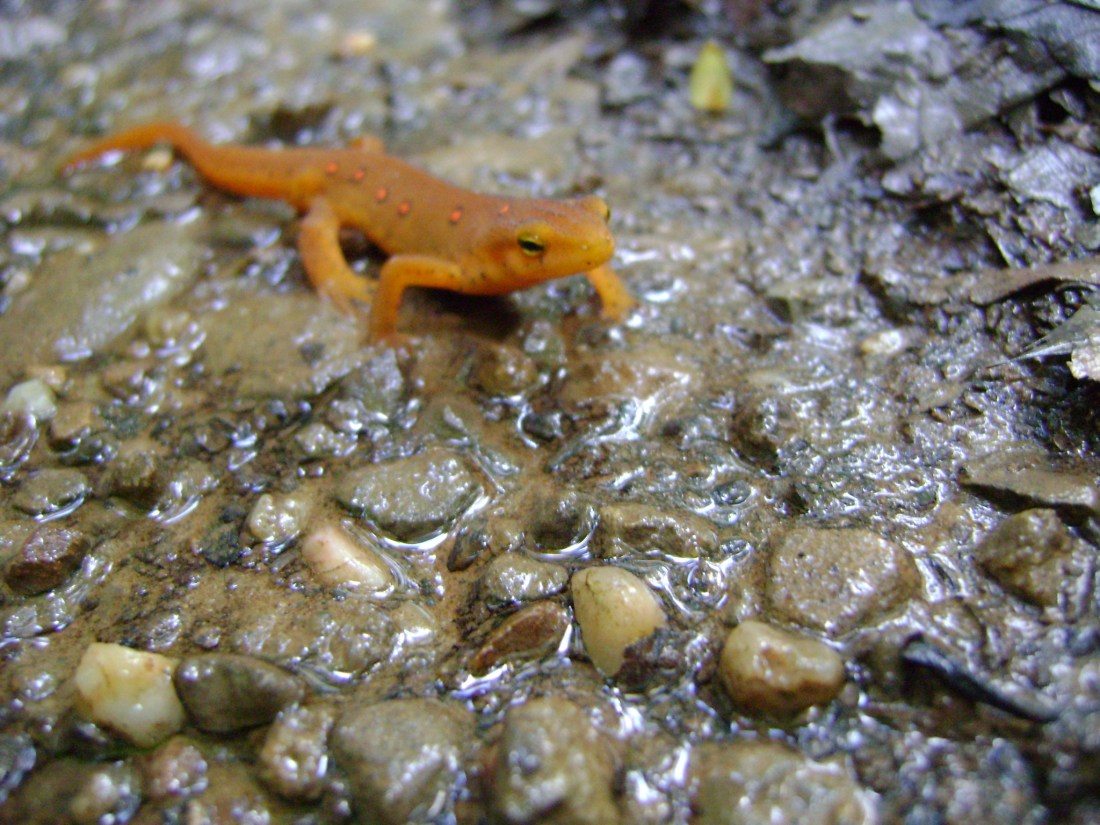
Meanwhile… slow moving turtles and salamanders will make their way over mountain ridges and through dangerous obstacles to return home if they are displaced. The red-spotted newt will travel miles to make its way back to its home pond by orienting itself using smells and an inner magnetic compass. Birds and butterflies can travel thousands of miles over new territory to make their way home or to a wintering site. The science behind such feats is not fully understood, but species have this “homing instinct” in which they use Earth’s magnetic field, smells, topography, or their relative position to the sun or night sky to navigate home or to a migration location.

We humans also have an innate “homing” instinct, and I came upon this opinion the hard way. Several years ago I felt as if my soul was dying and screaming for help and I helplessly stood by watching it happen, not even fully aware of the implications. I was deadening my very being just to function. I tried to fill my yearning with a relationship and gaining ground in my career, but then they were not enough. Nothing could fill the longing, and I lost track of even what I was longing for. I began looking for something more, but I didn’t even know what. I had lost myself and didn’t know what to do.

It took many aspects of my life falling apart to make a change. It has taken several years and many therapy sessions to even begin to reset. The losses have been numerous, but without losing many aspects of what and who I thought I was, I would not have realized that I was not those things. I was not my job, my relationship, my health, or my location. It is quite freeing to realize these things, although quite painful. It sounds very cliché, but it really took losing major aspects of myself to begin to find out who I truly am. I do not mean to imply that it was easy or that I have reached any sort end point.

The longing, I believe in large part, was a yearning for a return to who I truly am, my true self, who I am deep down. I had moved so far away in search of what I thought I wanted, that I left behind who I was. Yet, without leaving and searching, I do not know if I would have realized who I was or where “home” is. If we do not venture beyond our comfort zones, we won’t know where those boundaries of our comfort zone are, and if we don’t leave our “home” location, we won’t have the experience of learning how to find our way to it. Maybe this process is a homing instinct for us – the yearning for finding our true selves.

Birds, butterflies, and salamanders make it look so easy, but as usual, humans seem to blunder along a bit more before figuring it out. Our culture and egos cloud our view. We often do not stop long enough to even realize we are searching for something we deeply long for, and if we do, we do not know where to begin looking. We desire something of meaning, but go down many unfulfilling roads. Society gives us an endless number of wrong signals and supposed answers. One of the difficulties is, however, that we must find our own way back to our true self. We can do this by searching for what authentically speaks to our souls or essence, and this often involves learning how to even do that. After years of all sorts of voices yelling for your attention, the whisper of your own inner voice is hard to hear. Some find it again in meditation or contemplative prayer, some in nature, some in exercise, or some combination of practices, there are multiple ways to begin listening. While it may feel impossible at first, like butterflies and salamanders, I believe we have it in us to find our way home.

(Image: a red-eft [juvenile eastern newt] in West Virginia)

Welcome!

Nature has been referred to as the first sacred scripture. In this blog, my aim is to explore this concept. Nature is creation, and is therefore, a direct outpouring of the Creator. What better way to draw closer to the Divine and develop a greater understanding of the Presence than by learning more about the material manifestation of God’s love in the universe?

I will tend to use Christian terms because that is the language that I am most familiar with, however, if you are more comfortable or familiar with other terms, please don’t get hung up on my word choices and substitute as you see fit.