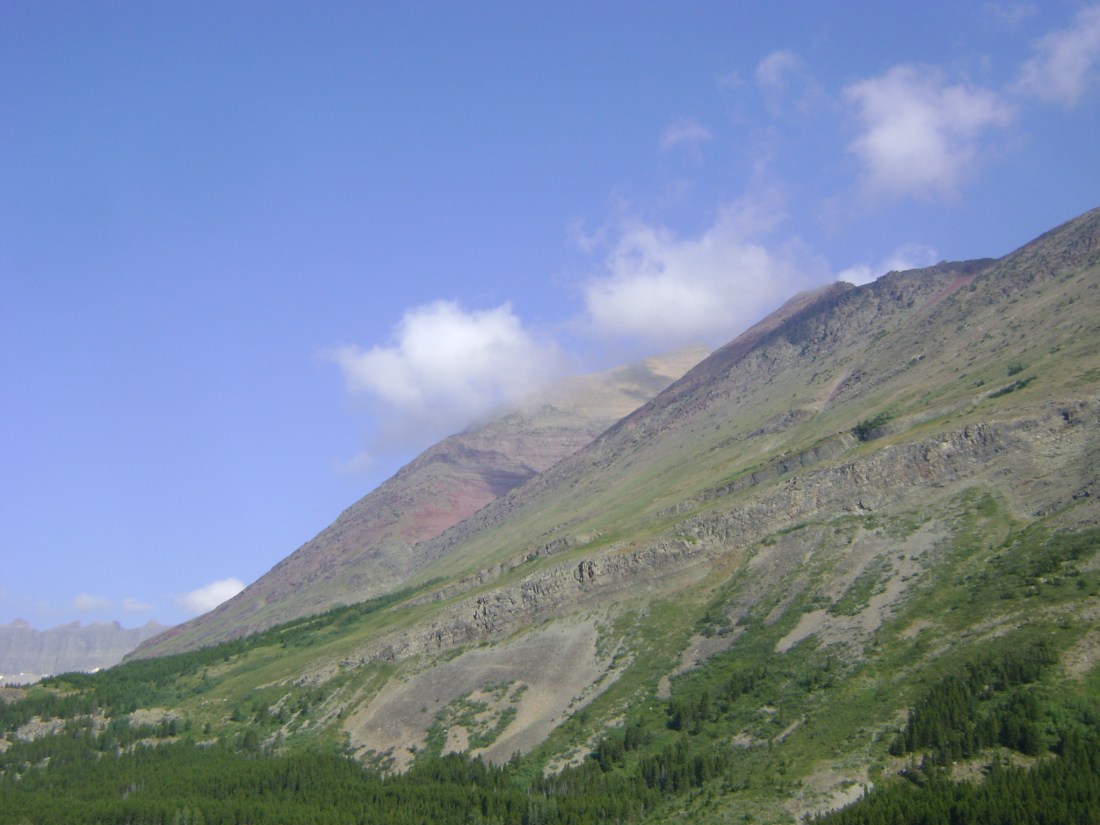
Where were your favorite spots to play when you were little? Was it is the bamboo thicket at the end of the street? The tree in the front yard? I’ve always been innately drawn to places of transition within nature. They seem the most interesting and obvious. When I was little, I played within the vines and brush that served as a boundary between our lawn and the forest. This space was perfect for building forts and secret places. Another favorite play spot was along the banks of the creek behind our backyard where the forest gave way to the cold flowing water and boulders of the creek bed. This fascination in boundary areas carried on through my formal education. I performed research for my master’s thesis on the transition from a forest to a wetland meadow, and my dissertation was on the tree-dotted transition area between the high-elevation alpine meadow and the thick conifer forest below.
The area of transition between two ecosystems or vegetation communities is called an ecotone. Ecotones often are rich in biodiversity because they are a mix of two communities. The extents of vegetation boundaries mingle within this zone. Species are often at the boundaries of their growing limits (which is why the ecotone is there). Conditions may get too wet or dry, too cold or hot, or soil characteristics may change. A species that likes wetlands will find the drier conditions of the surrounding uplands inhospitable. Whereas an upland species will only grow until the soil becomes too wet. At the edge of a wetland, the conditions are somewhat wet and somewhat dry, allowing species that live in wetlands and those that live in uplands to survive. This occurrence results in both the presence of wetland and upland species within the same area, creating a zone that contains more species than found within the purely wetland area or the fully upland area. However, because the species are not situated within their ideal habitat, they are often at their physiological limits.
We also experience times in our lives that are transitions from a place that we are familiar with to a place that is different. These may be changes in jobs or careers, relationships, location, and/or health. Within these transitions, we still carry our old patterns but are also faced with new circumstances. With a change in career, you may find yourself pining for what you loved about your previous job while learning what all the new one entails. A new relationship can be exciting and fun, but comes at the price of certain freedoms and time that only singleness can provide. These transitions are some of the richest in our lives but like the plants living within an ecotone, often-times we feel we are on the brink of what we can tolerate. Change can be uncomfortable and forces us to grow. This is painful and unfamiliar, but brings gifts that life-giving and new (may often be seen only after the fact).
Ecotones extend from very short spans to long distances. The ecotone between a lawn and an adjacent wooded area is often abrupt – grasses growing right up to the edge of trees and leaf litter. Likewise, our times of transition may be quick, but others may take years or decades to fully incorporate. Transitions among biomes (the overall ecosystem of an region) can extend hundreds of miles. Many ecotones are somewhere between the two extremes and extend from a foot or so to several yards. A variety of factors influence how abrupt or gradual an ecotone may be, and similarly, many factors affect the transitions we experience in our lives. Forced transitions may be painful and drag on for a seemingly unending amount of time. Health problems, layoffs, and break-ups are most frequently experiences that we did not want, and we resist them. Learning to accept what we did not ask for or feel we deserved is a hard process. As we face our “new normal,” we drag our feet or stop altogether. We did not want to be here. We did not ask for this. Acceptance can be a long road with many switchbacks and up and downs, but we eventually can get there. Acceptance will not change the fact that we have an incurable disease or will never be with our ex again, but it allows us to move on and begin growing within the new situation.
(Image: the treeline ecotone within Montana)
 Nature is Sacred