Have you ever just sat in a forest with your back against a tree? If you can stem the seemingly nonstop chatter in your brain, you may notice the calm quietness that seems to exude from trees. Their quietness asks for quietness in return. The steadiness of a large tree extends beyond the thickness of its trunk, the spread of its roots, and the extension of its branches. It flows throughout the forest.
When faced with overwhelming struggles or heartache, many times, no words can help. The pain pierces the deepest points of our being and words are mere static, babbling background noise that cannot reach the depth of our current existence. But presence can sometimes help when nothing else can. Someone who can hold our pain. Sometime this is a person, sometimes a pet, and sometimes a tree. Sometimes the pain is too much for another person, but a tree can take it and remind us that we also have the steady strength of a tree. Press against its trunk with your back, feel the unyielding pressure. The tree has seen storms blow through, felt the heavy weight of ice on its branches, and slowed its growth when water has become scarce. It cannot take shelter, it cannot run and hide. It must accept the sunny days and windy days, times of ample rainfall and those of drought.
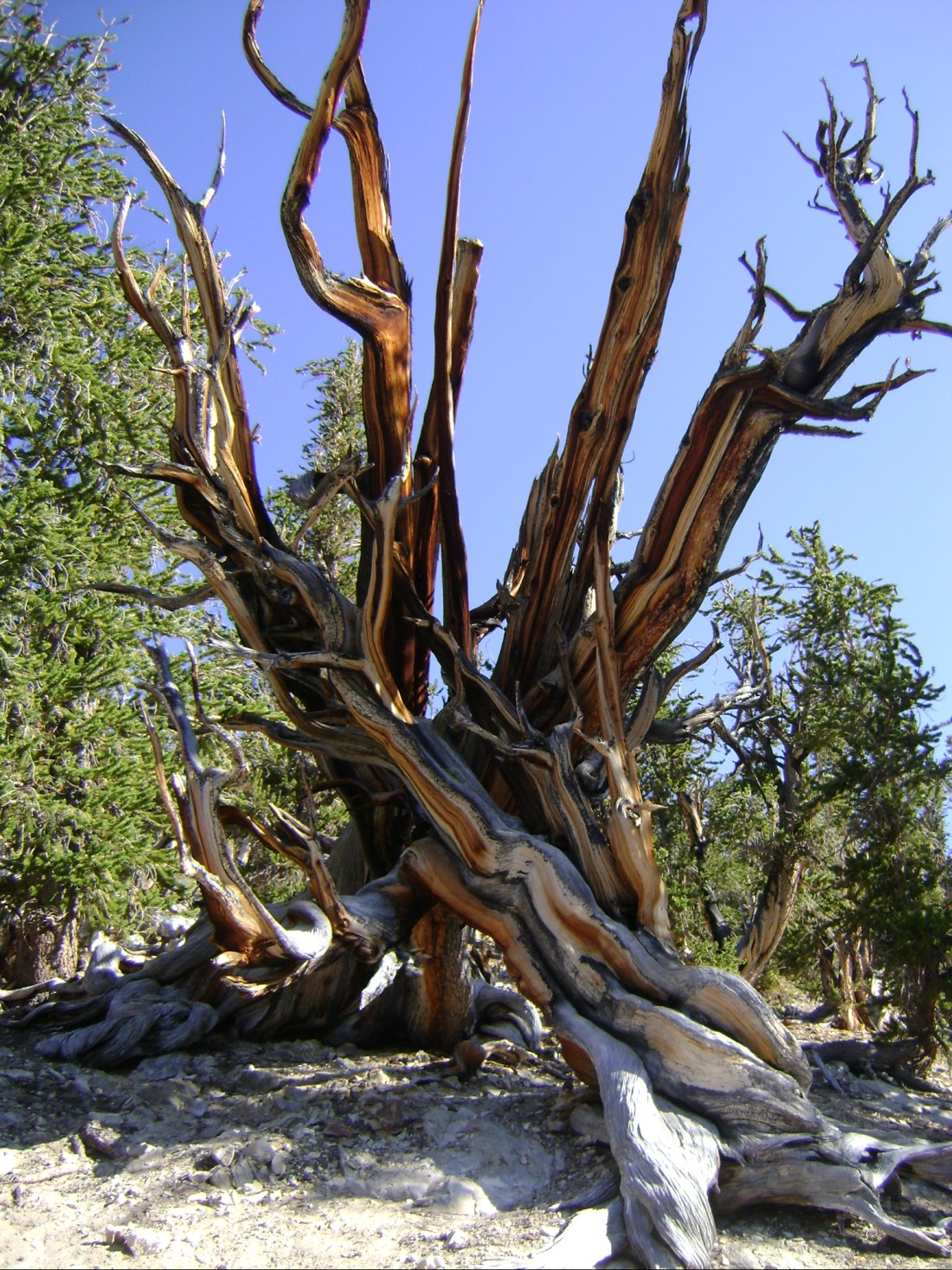
Their scars add depth to their character and winds increase their strength. A raised nub with a hollowed out center may have been a branch that broke off during a storm or died from disease. Lightning strikes leave behind a ridge on the trunk that extends from the ground upwards. Blights can cause large knots to protrude. Twisting and gnarled branches and trunks can indicate a struggle to survive. Some trees are over 100 years old but the thickest part of their trunk could fit within the loop made by your thumb and index finger, their growth stunted by harsh conditions. These trees with the gnarled stems, lightning strike ridges, and scars draw us in like someone with an interesting story to tell. You may have noticed the angled lines within the wood of a tree or limb that has lost its bark. This pattern occurs from winds pressuring the tree over time. In response, the wood within the tree or limb twists and is more flexible than wood with straight grain. The stress works to strengthen the tree.
 Nature is Sacred