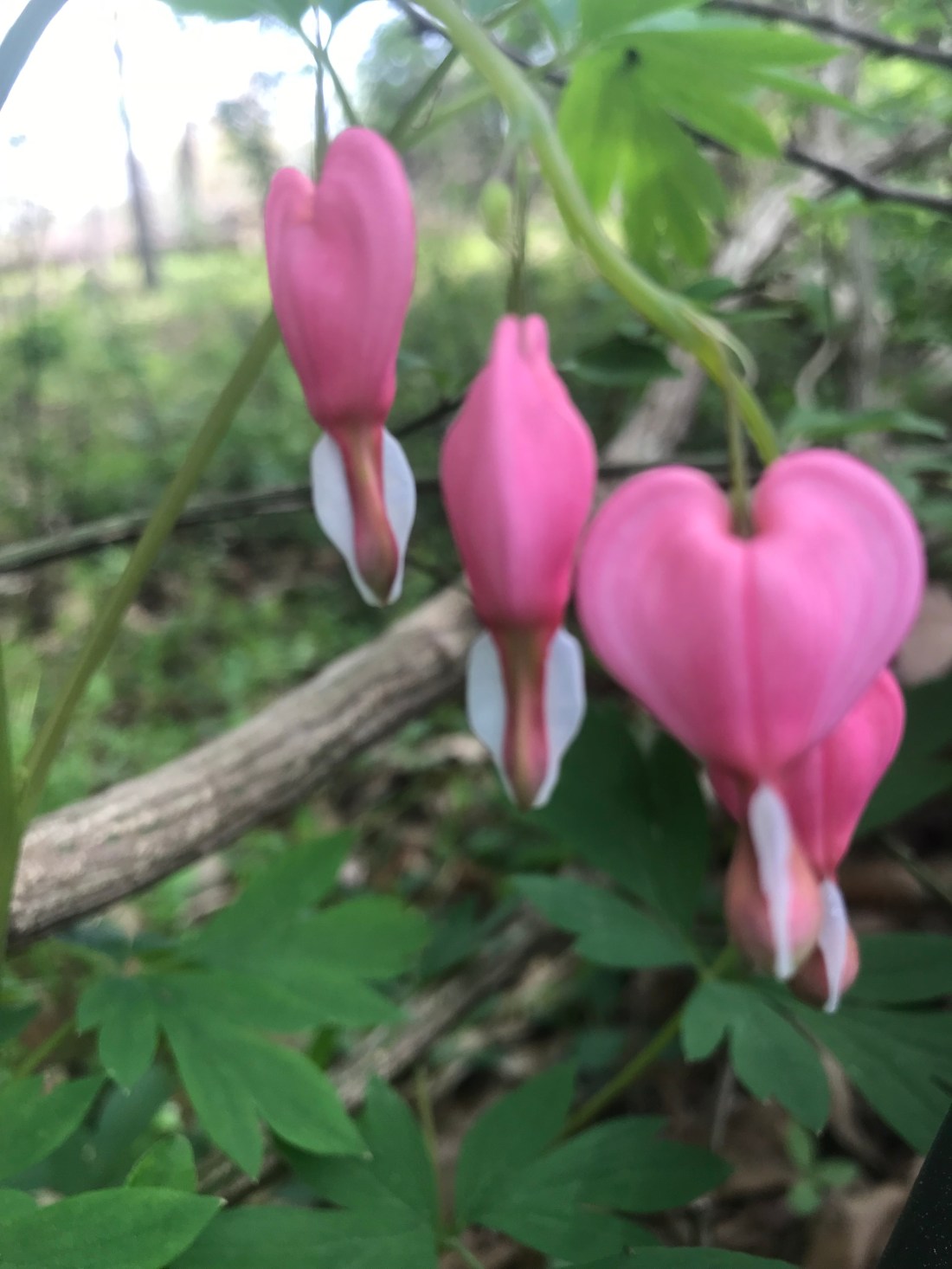
Spring and autumn are arguably the most beautiful times of the year in the temperate regions of the world. With springtime comes waves of colors – yellows, purples, pinks, whites, and greens. Each day seems to bring out more color as the browns and grays of winter fade into the background. Warmer temperatures cause enzymes within the plants to begin blooming in anticipation of even warmer weather. Light greens creep up the mountain sides, transforming the brown to green a bit more every day. Red buds line highways and speckle hillsides with their bursting pink blooms. Dogwoods unfurl from green to white bracts. Everyday is saturated in newness and brightness, even cloudy and rainy days just enhance the brightness.
Likewise, colors define the fall season. The green palette that we grow accustomed to during the summer transforms to reds, yellows, and oranges. The mountain sides and individual trees appear on fire with color. Cooler temperature trigger this change as the trees prepare for winter.
While spring and fall are both bursting with color and beauty, they are also often the most tumultuous seasons of weather. Spring, as the air temperatures warm with the changing relative position of the sun to the Earth, is the transition from winter to summer in the U.S. In the Northern Hemisphere, the movement of the Earth results in the direct rays of the sun migrating from the equator on the spring equinox (around March 21st) northward, reaching its northern-most extent on the summer solstice (around June 21st). This pattern heats up the Northern Hemisphere during the spring and summer months, as the Southern Hemisphere cools. After the fall equinox (around September 22nd), the sun’s direct rays slide southward, and the Northern Hemisphere cools and the Southern Hemisphere heats up.
These shifts in temperature affect more than whether we need to wear shorts or a coat. Differences in temperature produce changes in air pressure. Air pressure can be difficult to conceptualize. Often, to us, air feels like nothingness – no weight, no resistance. But air actually has varying pressure depending on where you are and temperature patterns. Air pressure is often greatest at the base of a mountain and lower as you hike to the top of the mountain because less air is above you as you get higher in elevation.
A helpful way to think of air pressure is to try to visualize air as a bunch of molecules (little circles or bubbles, if you like, or the plastic balls in a play area). Picture them as filling our atmosphere. If you are beneath all those balls or bubbles, the weight or pressure is greater than if you are near the surface of the balls or bubbles because less molecules would be above you if you are near the top. Air is the same way. At sea level, we have more air above us than if we were at the top of Mt. Everest, and therefore, there is greater air pressure at sea level than at the peak of Mt. Everest.
Temperature also affects air pressure. When air is heated, the pressure increases as the molecules become more active and exert more pressure on their surroundings. Molecules in cooler air do not have as much energy and are less active, and therefore, cause less pressure. As the Earth moves around the sun and the direct (most intense) rays of the sun strike different latitudes, various locations on Earth experience shifts in temperatures, which in turn, affect air pressure. Differences in air pressure generate wind.
(I am going somewhere with this.)
Sooooooo… shifts in global temperature patterns affect air pressure which influences wind patterns which directly affect weather patterns. Therefore, with the transitions of spring and fall and changing temperatures, we often see the most intense weather patterns. In the U.S. during the spring time, winds from the Gulf drive up warm, moist air which collides with cold air still descending from Canada. The collision of these two opposite air masses results in an unstable atmosphere which can generate severe storms, flooding, and tornadoes. In the fall, hurricanes are formed from the warm Atlantic and Gulf waters and wind patterns in place over Africa and the Atlantic. The Great Lakes region sees lake effect snows because the lake water is still warm but the air coming across them is cold, causing heavy snows downwind (e.g. Erie, PA and Syracuse, NY).
We see this paradox of heightened beauty and turbulence in our own lives at times of transition. While times of change can frequently bring about new growth and heightened awareness, it can also be painful and uncomfortable. Springtime storms can blow through a forest and knock down dead trees and limbs, cleaning out for new growth. Likewise, painful or transitional episodes in our own life can blow through, wiping out stuff that we no longer need and refocusing our priorities. If we allow it to.
Unlike trees, however, we often resist what is happening if it is uncomfortable or we don’t want it. It is easier to bury our heads in the sand, push the pain away, or somehow deaden it. Allowing the pain in, however, enables us to deal with it and get through it. It is like riding out a storm, hunker down and feel the lashing winds and pelting rain and the temperature drop from a warm embrace to a biting chill. The alternative is to run from it, but you can’t outrun it forever or it will be the driver of your life.
Allowing yourself to feel the storm and suffer its pain can result in growth if you surrender and allow it to enter. You may be bashed from one side and then the other, feel like you are going to drown in the rain or freeze in the icy winds that follow. Just accept it or at least allow it to happen. You can’t stop the storm.
Afterward, if you allow, your dead branches will be gone and your last remaining leaves from the previous year are blown off. Rain has nourished your roots. It’s not easy afterward but you can experience growth and enrichment in your life as new facets of yourself develop and blossom. You can learn more about yourself and life itself. You will shed those parts of your self that are not doing you any good, not enriching your life. You will find things with deeper meaning that do truly enhance your life and learn to cultivate them instead. You become more compassionate and wiser.
 Nature is Sacred